A subscription changes mid-contract. Which invoice should change?
The amendment date, effective date, service period, and invoice date answer different questions. Keep them separate.
By the Duebird team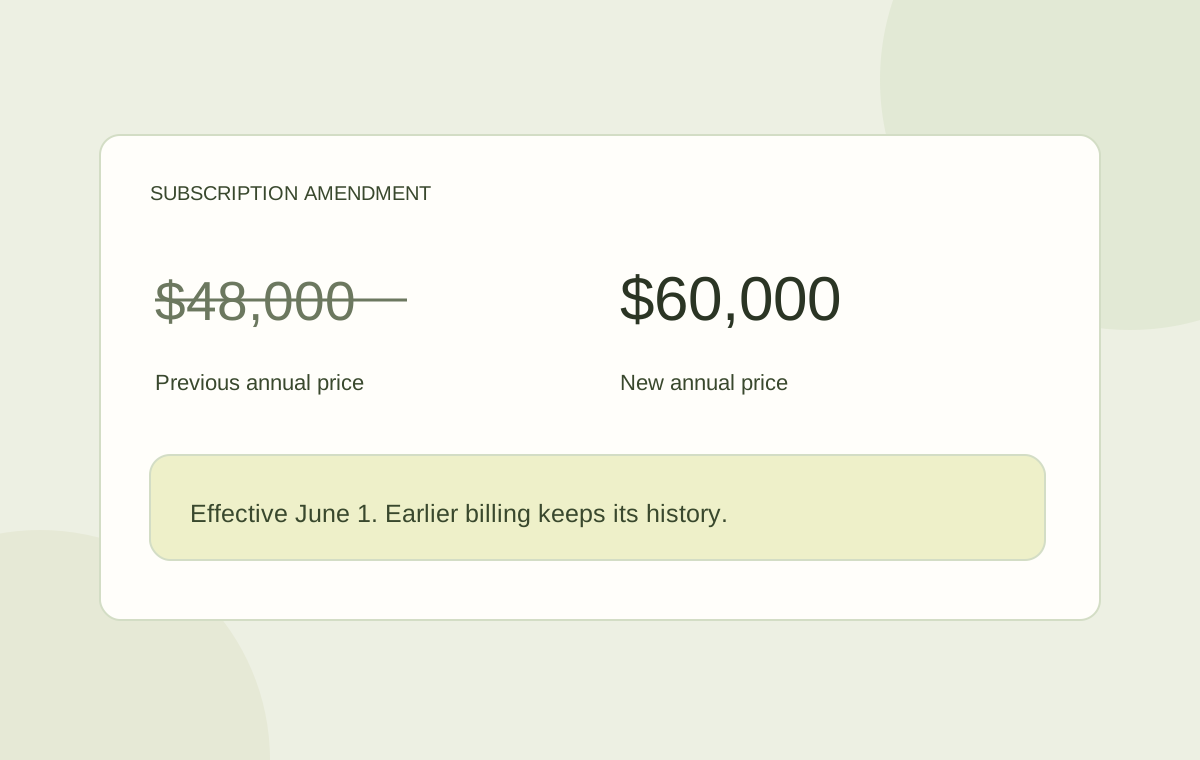
Use the amendment’s effective date and affected service period to determine which billing changes. Keep the signed amendment, invoice date, and already-billed amounts available for review.
A customer signs a price amendment today. That does not automatically mean today’s invoice should change. The amendment may take effect next month, at renewal, or halfway through a period that has already been billed.
Before updating the schedule, identify when the new terms apply and how partial periods should be treated. Then review the next charge against both the old agreement and the amendment.
Capture the dates that control the change
The signature date proves when the amendment was accepted. The effective date establishes when the revised commercial terms begin. The service period shows what the charge covers. The invoice date determines when you ask for payment.
Keep all four in the record. If the amendment says “from June 1,” a March invoice should not quietly inherit the new annual price.
| Date | Question it answers |
|---|---|
| Signature date | When was the change accepted? |
| Effective date | When do the new terms begin? |
| Service period | What delivery or access does the charge cover? |
| Invoice date | When is the customer billed? |
Decide whether the change requires proration
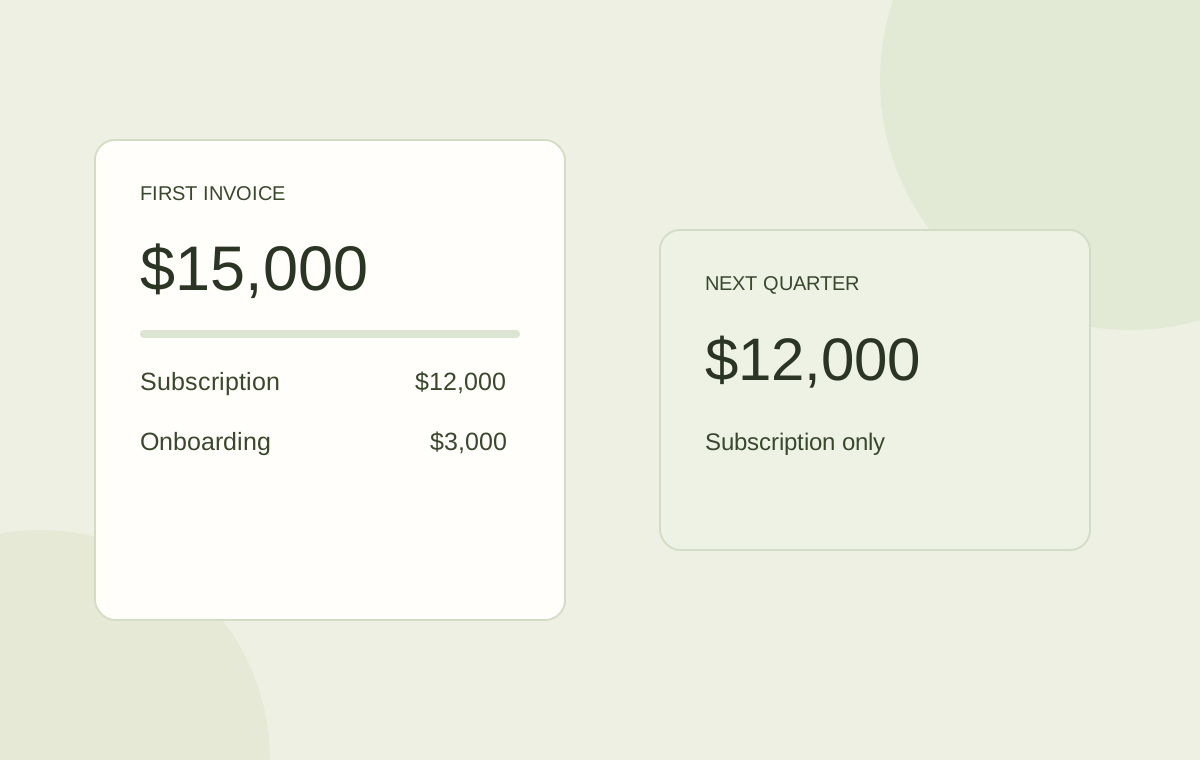
A change at a billing boundary can be straightforward. For example, an annual subscription moves from $48,000 to $60,000 at the start of the next quarter. Under a quarterly billing arrangement, the next full-quarter subscription charge moves from $12,000 to $15,000.
A mid-period change needs an agreed policy. Does the customer owe an incremental amount for the remaining days? Does a credit apply to unused service? Will it appear immediately or on the next invoice? The effective date alone does not answer those questions.
Preview the financial result
Show the old rate, new rate, relevant quantity, date range, and any adjustment as separate parts of the review. A customer should be able to understand how the amount was calculated.
If a prior invoice is already issued, decide whether the process requires a new charge, credit, or correction. Avoid changing historical billing just to make the current schedule look tidy.
- Retain the accepted amendment and earlier version.
- Identify the affected service period.
- Apply the agreed proration and credit policy.
- Preview the next invoice and any separate adjustment.
- Confirm the customer-facing explanation before sending.
Carry the change beyond billing
The same amendment can matter to sales, collections, and revenue accounting. Sales needs the current commercial terms for renewal. Collections needs to explain the changed invoice. Finance needs to assess the revenue implications under the applicable policy.
These teams should not discover the amendment independently. Keep its effective date and accepted source with the account and the schedules it affects.
Make the review part of the schedule
Duebird connects agreed terms and amendments to billing preparation. Finance can see the source of the proposed change and review how it affects upcoming invoices.
Bring a real amendment to a walkthrough, including any already-issued invoice. Working through that example will reveal more about fit than a generic question about whether the product “supports subscriptions.”
The accepted amendment sets the new terms. Its effective date and your proration policy determine the affected charge.
Sources and further reading
Official references for the concepts and software examples discussed in this article.