How to bill quarterly without charging onboarding twice
A subscription repeats. Onboarding usually does not. Keep those charges separate from the first billing schedule.
By the Duebird team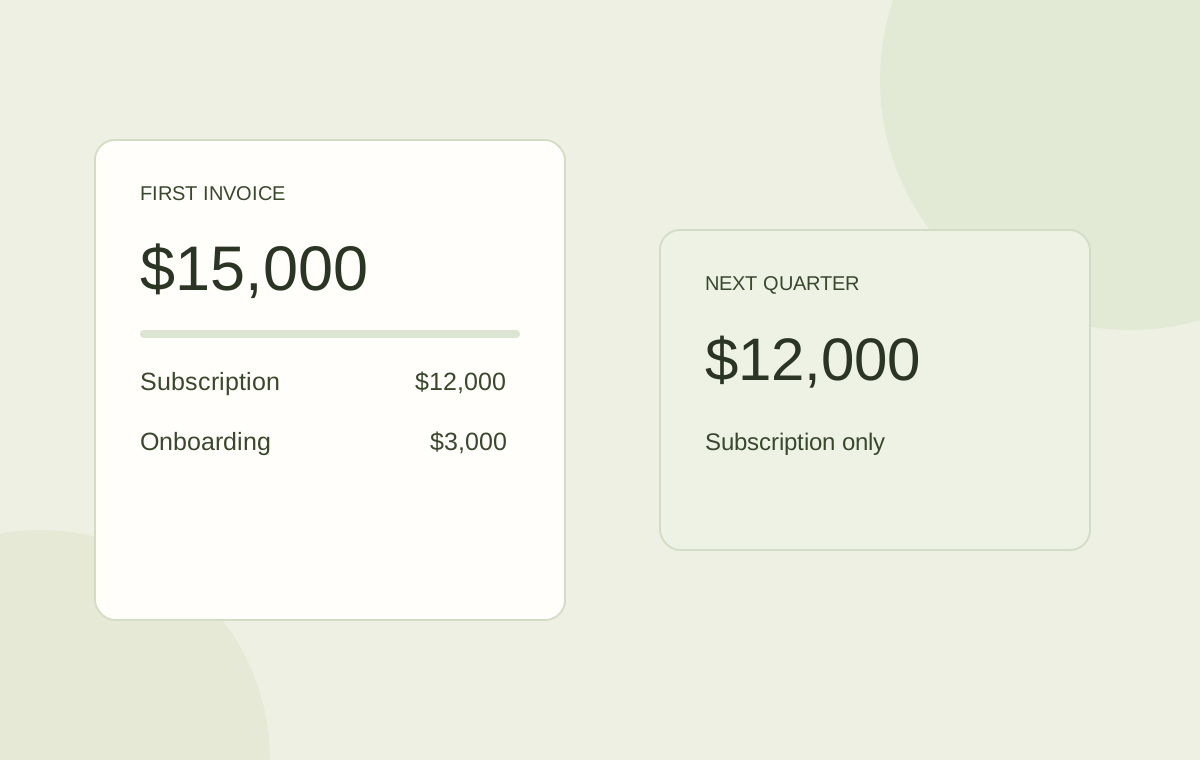
Put the subscription and onboarding fee on separate billing rules. Include both on the first invoice, then repeat only the subscription charge on later quarterly invoices.
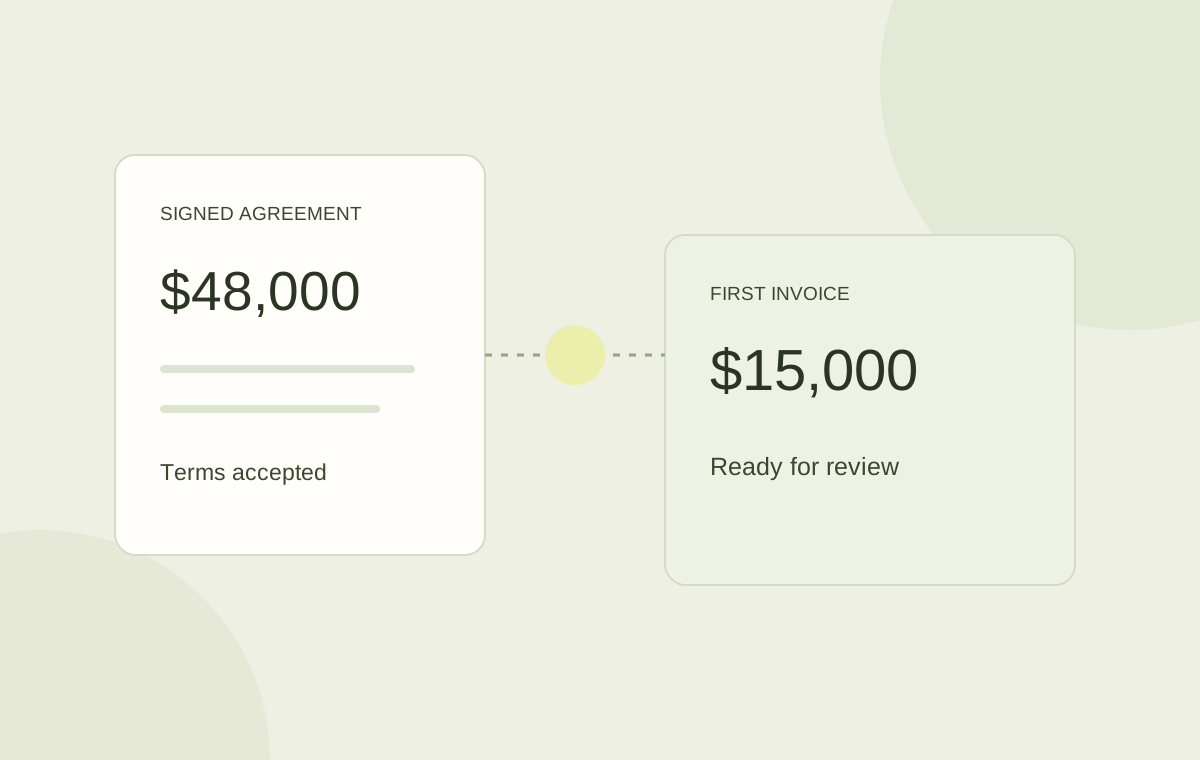
A customer signs a $48,000 annual subscription, billed quarterly, plus a $3,000 onboarding fee. The first invoice is $15,000. The next quarterly subscription invoice is $12,000. Repeating the first invoice template would charge onboarding again.
The problem starts when a mixed first invoice is treated as the recurring definition. The customer sees one total, but your billing process needs two charges with different timing.
Model the charges separately
Set up the subscription with its own price, frequency, service period, and start date. Give onboarding a one-time charge and a defined billing trigger. You can combine both on the first invoice while keeping their schedules distinct.
| Charge | Timing | Amount |
|---|---|---|
| Annual subscription | Quarterly, at the start of each period | $12,000 per quarter |
| Onboarding | Once, on the agreed trigger | $3,000 |
| First invoice | Subscription plus onboarding | $15,000 |
| Later quarterly invoices | Subscription only | $12,000 |
Decide exactly when the one-time fee becomes billable
“One-time” describes frequency. It does not establish the billing date. Your agreement might bill onboarding at signature, at the service start date, or after a milestone. Record the trigger rather than automatically attaching every setup charge to the next invoice.
Where the charge depends on completed work or customer approval, keep that evidence beside the proposed invoice. The team should be able to see whether it is ready to bill without asking sales to reconstruct the conversation.
Review the second invoice before the first one is forgotten
The first invoice gets attention because it introduces the relationship. The second invoice tests whether the schedule was configured correctly. Preview it while the signed terms and first invoice are still fresh.
- Check that onboarding is absent from later recurring charges.
- Confirm that the next service period follows the previous one.
- Keep the annual price and quarterly amount consistent.
- Check the invoice recipient and any required customer reference.
- Keep a record of any exception to the normal schedule.
Keep amendments separate from accidental repeats
A later implementation project may create another legitimate one-time charge. That should have a new source and billing trigger. Reusing the old onboarding line makes it harder to explain why a customer is being charged again.
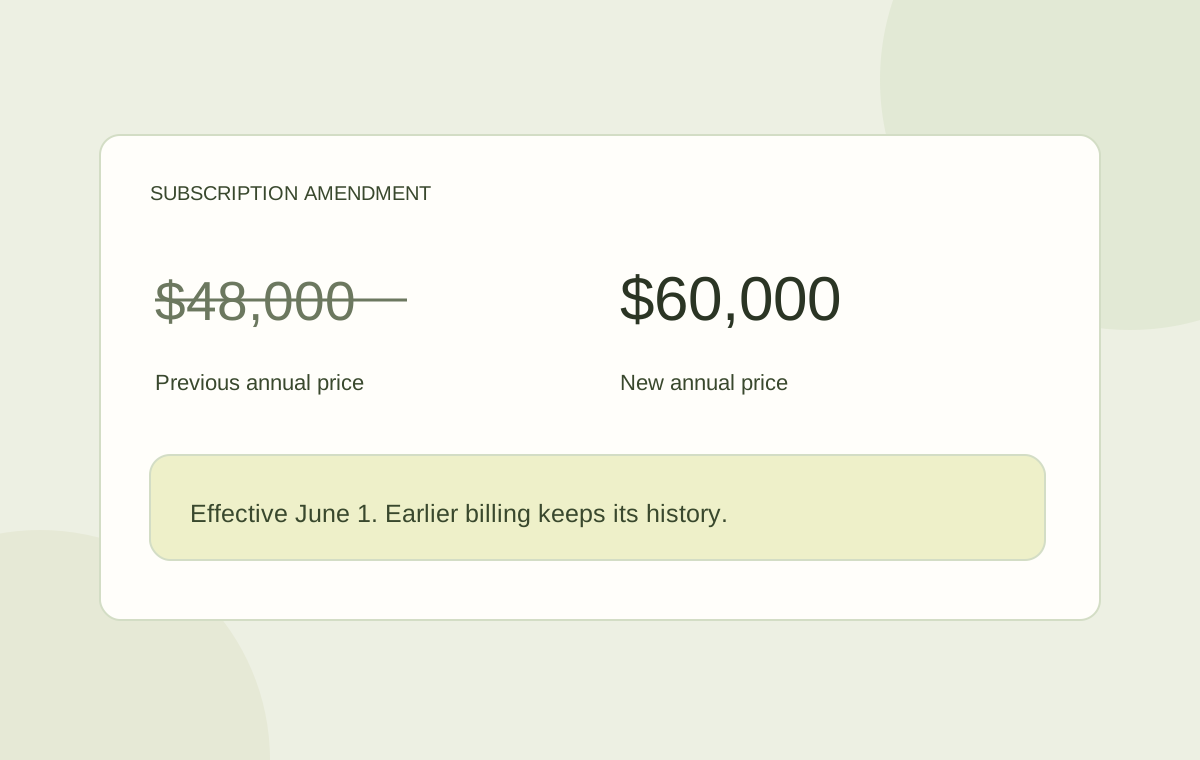
If the contract changes, preserve the earlier billed period and record the effective date of the new terms. A price change and a repeated setup fee are different events, and the customer should be able to understand both from the invoice.
Connect the schedule to the accepted terms
Duebird keeps recurring and one-time charges with their commercial source. Finance can review what bills now and what follows next, with the agreement available beside the work.
This is a billing example, not a revenue recognition conclusion. Charging onboarding once does not establish when its revenue should be recognized. Your accounting team still evaluates the promised services and the policy that applies.
Combine charges on an invoice when appropriate. Keep their frequency and billing triggers separate.
Sources and further reading
Official references for the concepts and software examples discussed in this article.