Quote-to-cash or CPQ: which do you need?
CPQ prices the offer. Quote-to-cash carries it through billing and collection. Start with the part of the work that breaks today.
By the Duebird team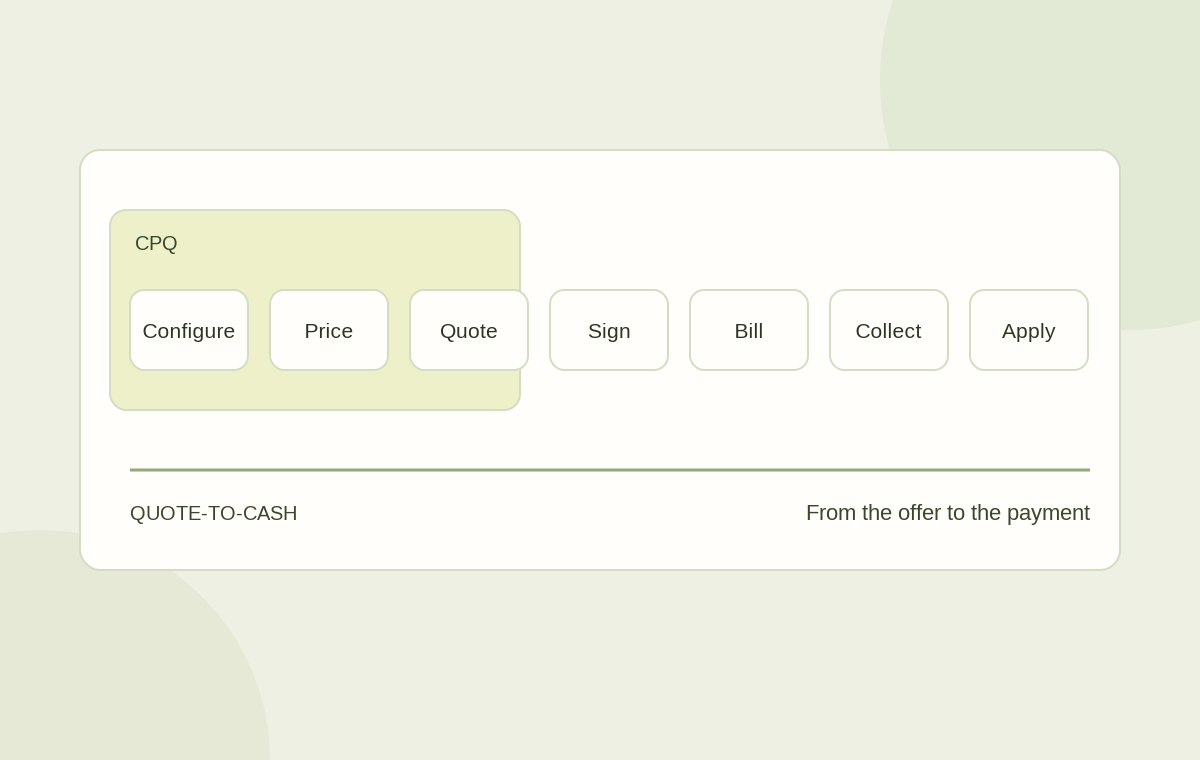
CPQ configures, prices, and produces the quote. Quote-to-cash carries the accepted offer through the contract, billing, collection, and payment. If quotes are right but invoices and payments go wrong, the gap is after the quote.
CPQ helps a team configure and price an offer. Quote-to-cash covers the wider path from that offer through the contract, billing, and collection. Start with the work that breaks today. If the quote is correct but the first invoice or payment follow-up is lost, evaluate the handoff as well as the quote builder.
The two terms are often used as if they meant the same thing. One describes a step. The other describes a path that includes it.
Define the job each covers
CPQ stands for configure, price, quote. Quote-to-cash runs from that offer to collected payment.
These are descriptions of categories. A particular product may cover more or less, so ask to see it.
| Job | CPQ | Quote-to-cash |
|---|---|---|
| Configure and price the offer | Yes | Yes |
| Send the proposal | Yes | Yes |
| Collect the signature | Often | Yes |
| Turn terms into billing rules | — | Yes |
| Prepare and deliver invoices | — | Yes |
| Follow up with the customer | — | Yes |
| Apply payments | — | Yes |
Work through two buying situations
In the first, quotes take too long and pricing errors slip through. The billing that follows works. A quoting layer may be enough.
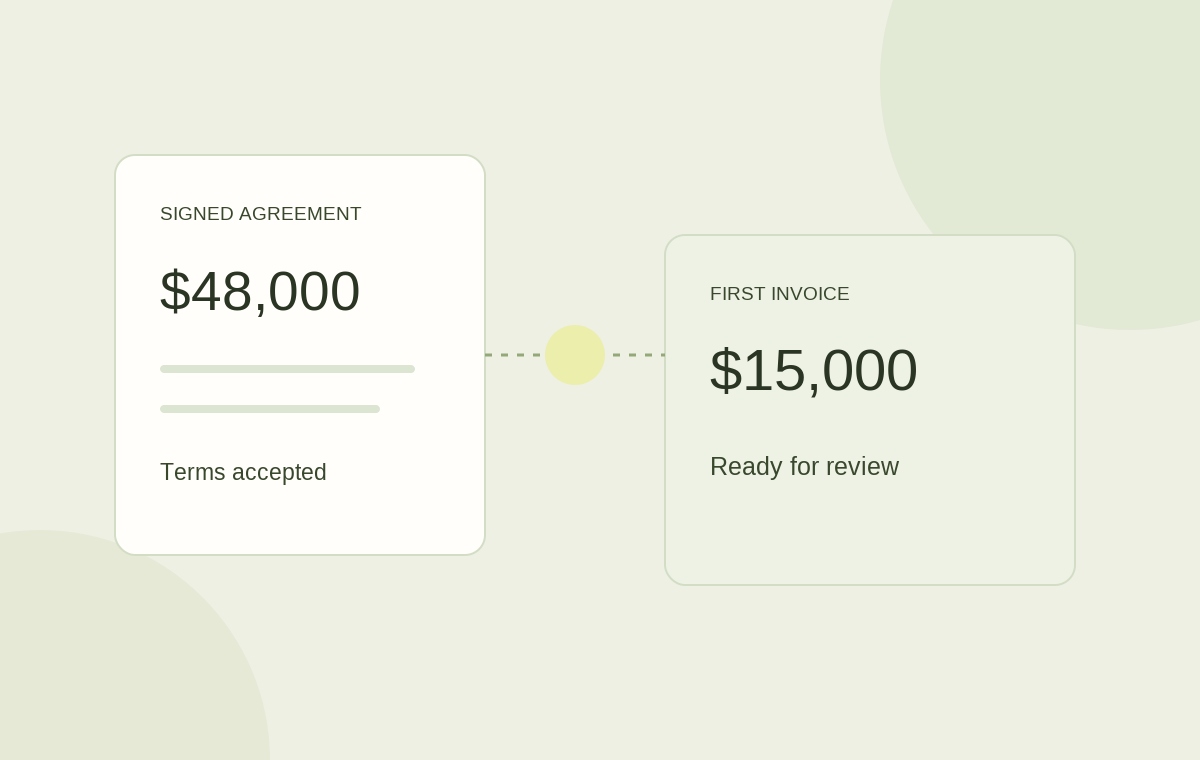
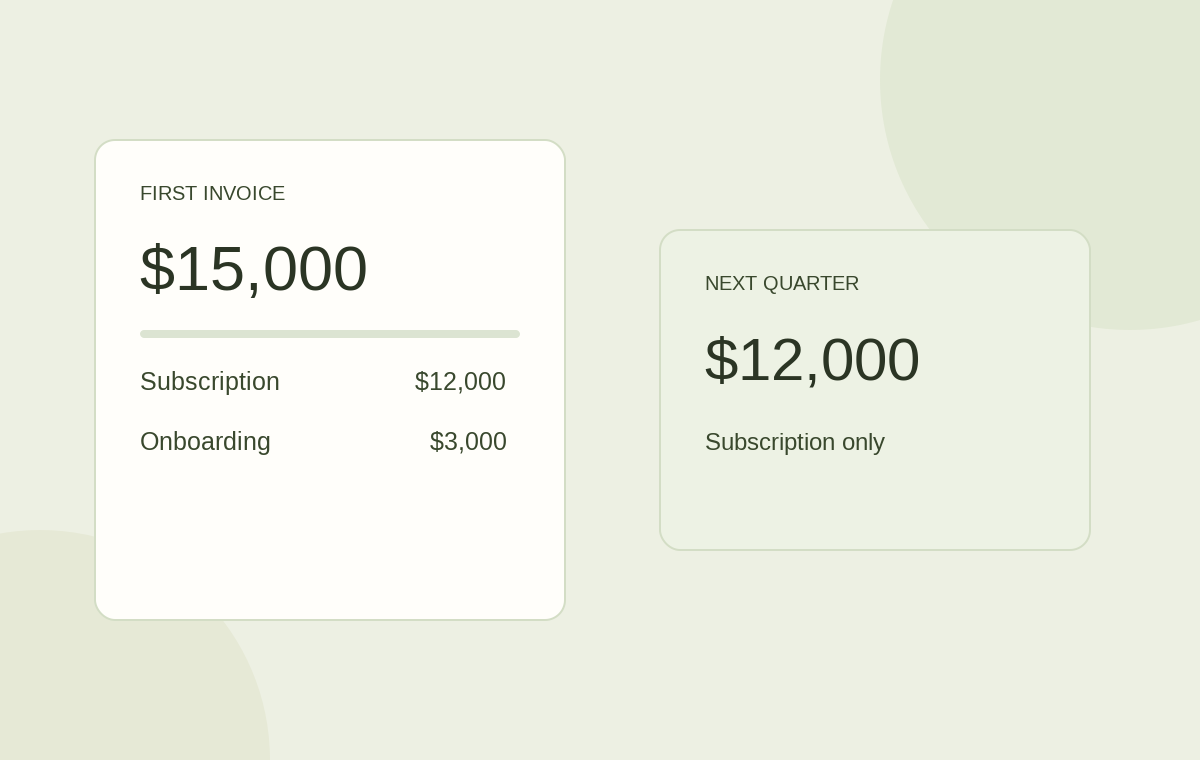
In the second, the quote is right, but the first invoice goes out late, onboarding is billed twice, or a payment promise is lost. The break is in the handoff after signature, and a better quote builder will not fix it.
If your ERP already issues invoices, you can keep it and connect collection and payment application around it.
For that case, see how to keep billing in the ERP and improve what follows.
Ask vendors to show one complete example
Bring one realistic deal to each evaluation and ask to see it from start to finish.
- A one-time onboarding fee beside a recurring charge.
- A mid-term amendment with an effective date.
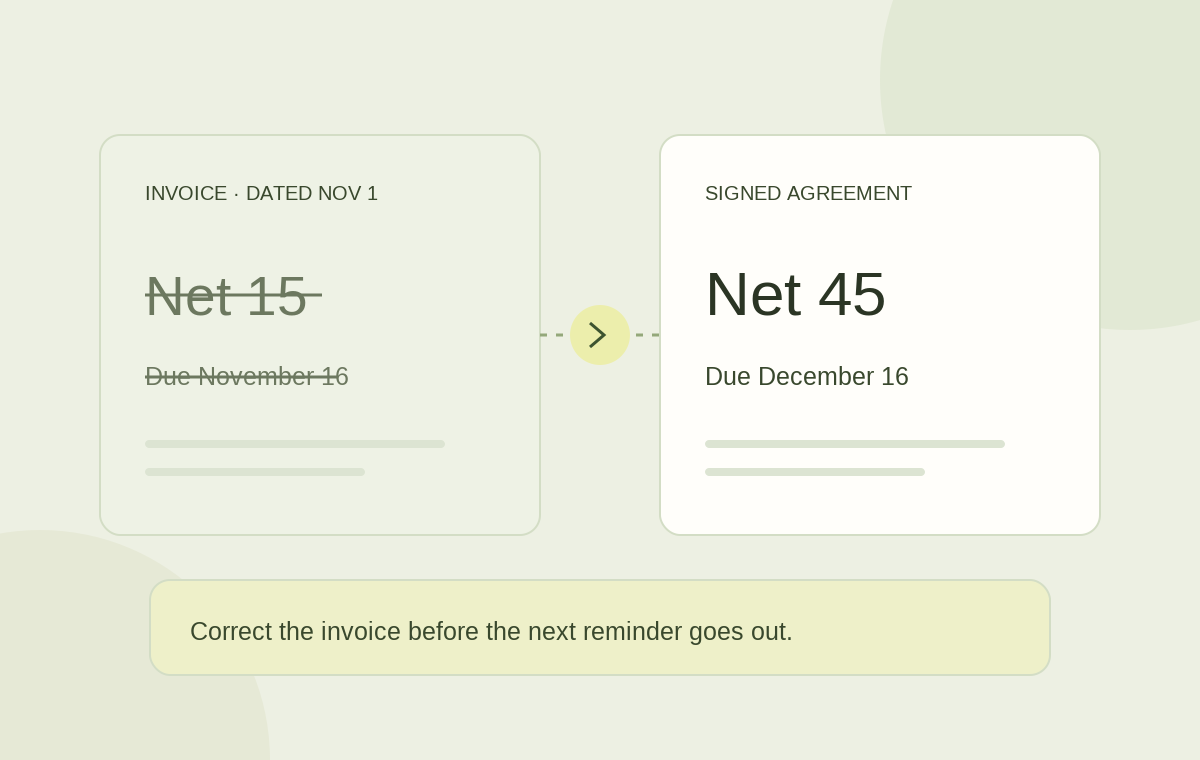
- A customer question about the invoice.
- A payment promise and its follow-up.
- One receipt that pays two invoices.
- Where each state is visible, and who owns it.
You can see proposal and e-signature steps as the first part of that example.
Choose a fit without rebuilding everything
Map what each system does today: the CRM, the ERP, signing, and billing. Replace the part that breaks, and connect the rest.
A CRM can stay the system for pipeline. An ERP can stay the system for accounting. The question is where the agreed terms live once the deal is signed.
Keep the accepted offer with billing
Duebird keeps the accepted quote, its selected options, and its pricing with the customer account, and carries them into billing and collection.
Bring one recent deal to a walkthrough, and follow it from quote to payment.
You can explore quote-to-cash with an accepted offer of your own.
Choose by the work that breaks today. If the quote is right and the handoff is not, look past the quote builder.