Billed, collected, and earned: three different numbers in a SaaS contract
An annual contract can have quarterly invoices, later cash receipts, and a monthly revenue pattern. Here is why those timelines differ.
By the Duebird team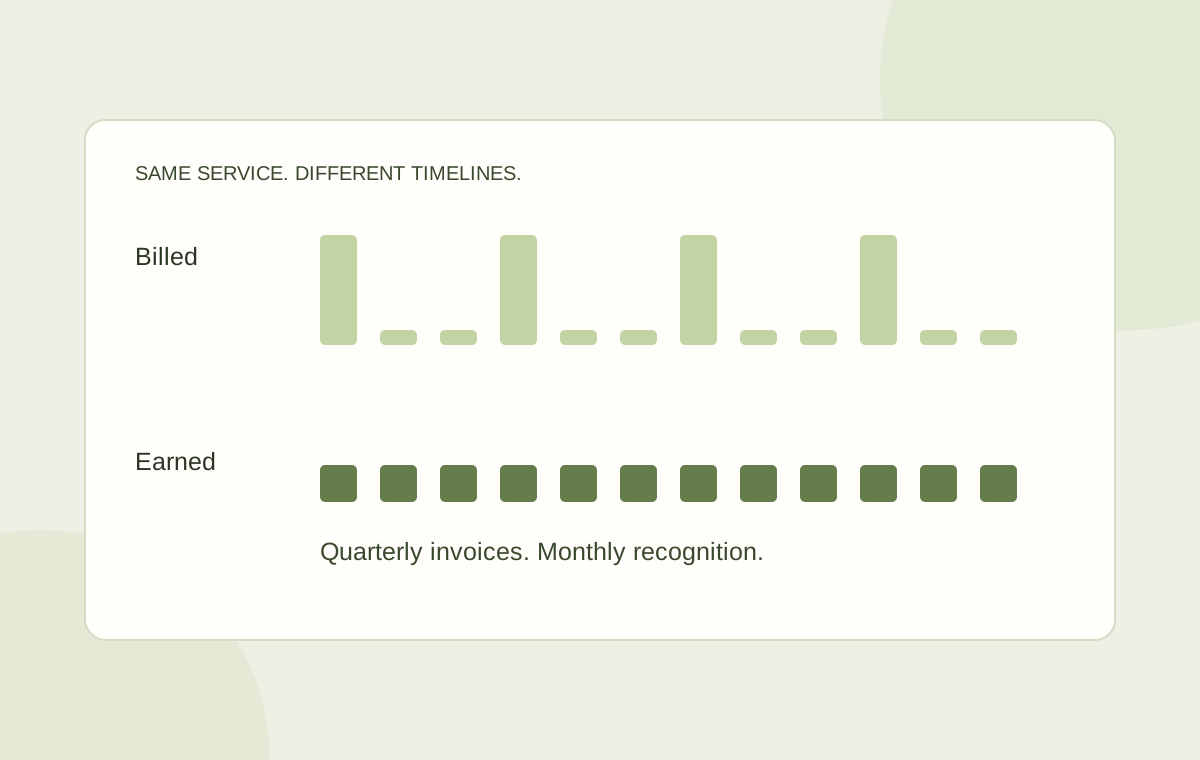
Billing records the invoice, collection records the customer’s payment, and recognition records revenue under the finance team’s accounting policy. The three events can occur on different dates.
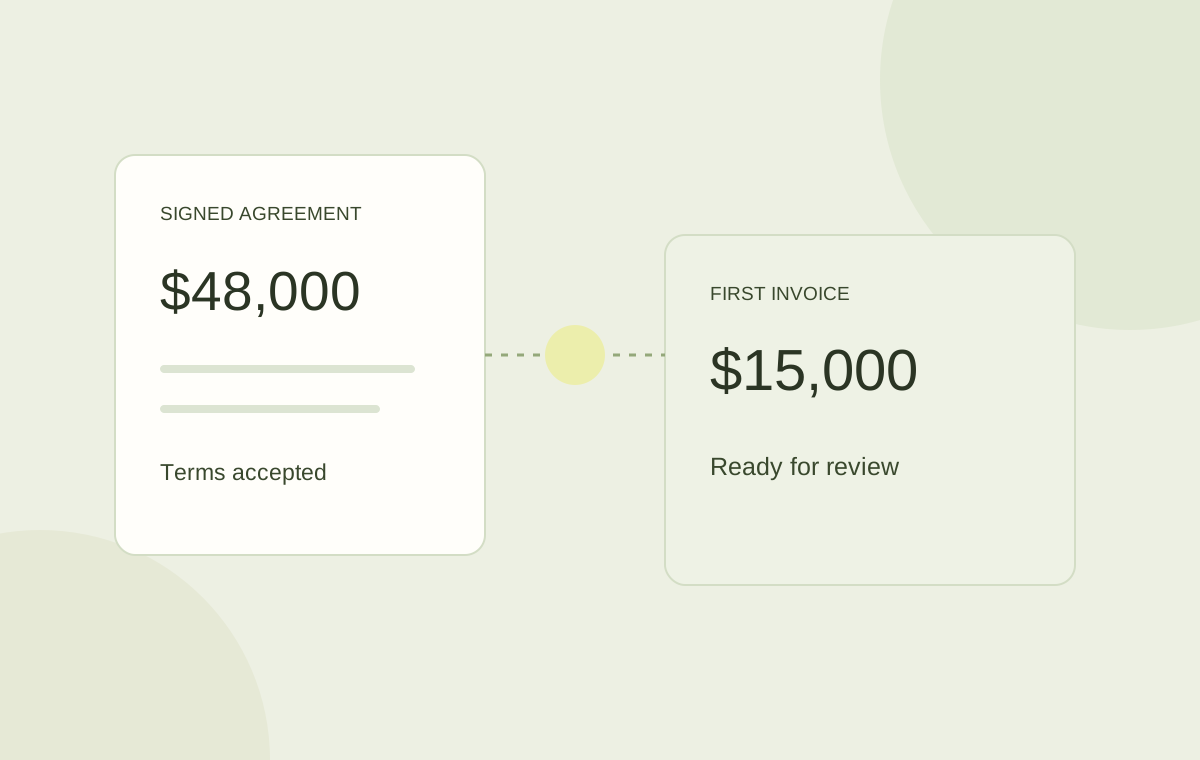
Your customer signs a $48,000 subscription for a year of service. You bill $12,000 at the start of each quarter. The customer pays according to the invoice terms. Your revenue schedule may still recognize $4,000 each month.
Those numbers describe different events. Billing establishes a receivable. Collection records the money received. Recognition reflects the transfer of the promised service under your accounting policy.
Start with the service being delivered
For this example, assume a fixed annual subscription provides an even service over 12 months, with no contract modification or variable consideration. Assume the applicable policy supports straight-line recognition over that period. The resulting monthly amount is $48,000 divided by 12, or $4,000.
This is a deliberately simple example. Performance obligations, allocation, variable fees, modifications, and other contract terms can change the accounting treatment. The invoice schedule should not substitute for that assessment.
Keep the three timelines visible
Quarterly billing produces four $12,000 subscription invoices. Recognition in this example follows the 12-month service period. Cash depends on when the customer actually pays.
| Event | What happens | What it does not prove |
|---|---|---|
| January invoice | $12,000 is billed for the first quarter. | That all $12,000 is earned in January. |
| January service | $4,000 is recognized under the stated policy. | That payment has arrived. |
| Customer payment | The receipt is applied to the receivable. | That the entire receipt is current-period revenue. |
Understand what remains deferred
Under these assumptions, after the first month of service, $4,000 of the $12,000 quarterly billing has been earned. The remaining $8,000 relates to the next two months of service. Your accounting process needs to preserve that distinction.
The timing of cash does not change the service already delivered. A late customer can create a collection problem while the recognition schedule continues to follow the applicable accounting assessment. Other accounting considerations, including collectibility, need their own review.
Do not let a setup fee choose its own policy
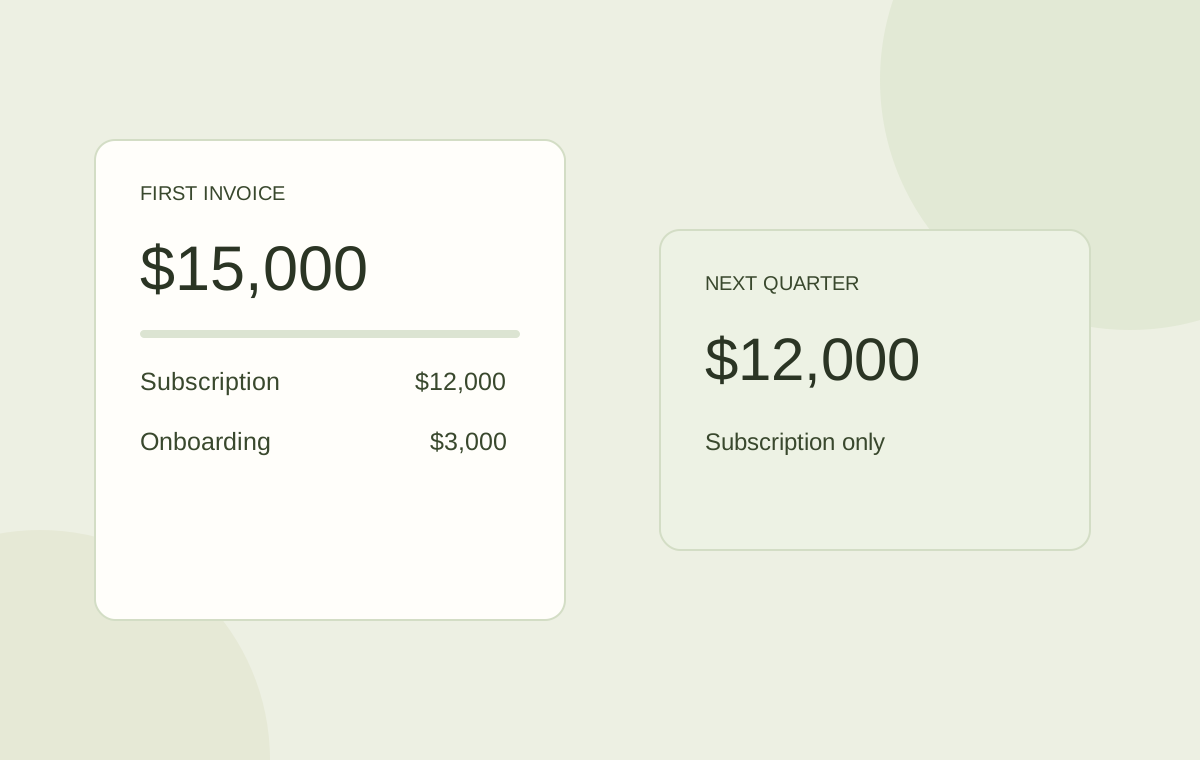
Adding a $3,000 one-time onboarding charge makes the first invoice $15,000. It does not, by itself, tell you when the onboarding revenue is recognized. Finance must assess the promised work and whether it is a distinct obligation.
Keep the onboarding description, delivery evidence, and relevant contract terms available for that decision. “Billed once” and “recognized immediately” are different conclusions.
Give the close process a clear source
A useful review connects the accepted agreement, service start and end dates, billing history, accounting policy, and amendments. That makes it possible to explain why the invoice total, customer balance, and revenue for the month differ.
Duebird keeps the commercial and billing context with the revenue workflow. Your finance team determines the applicable ASC 606 or IFRS 15 treatment and reviews the schedule against that policy. Confirm reporting and accounting output requirements during implementation.
Use billing dates for invoices, receipt dates for cash, and the assessed service obligations for recognition.
Sources and further reading
Official references for the concepts and software examples discussed in this article.