Working with NetSuite: what stays and what connects
NetSuite keeps the accounting record. Here is how billing, collection, and payment review connect to it.
By the Duebird team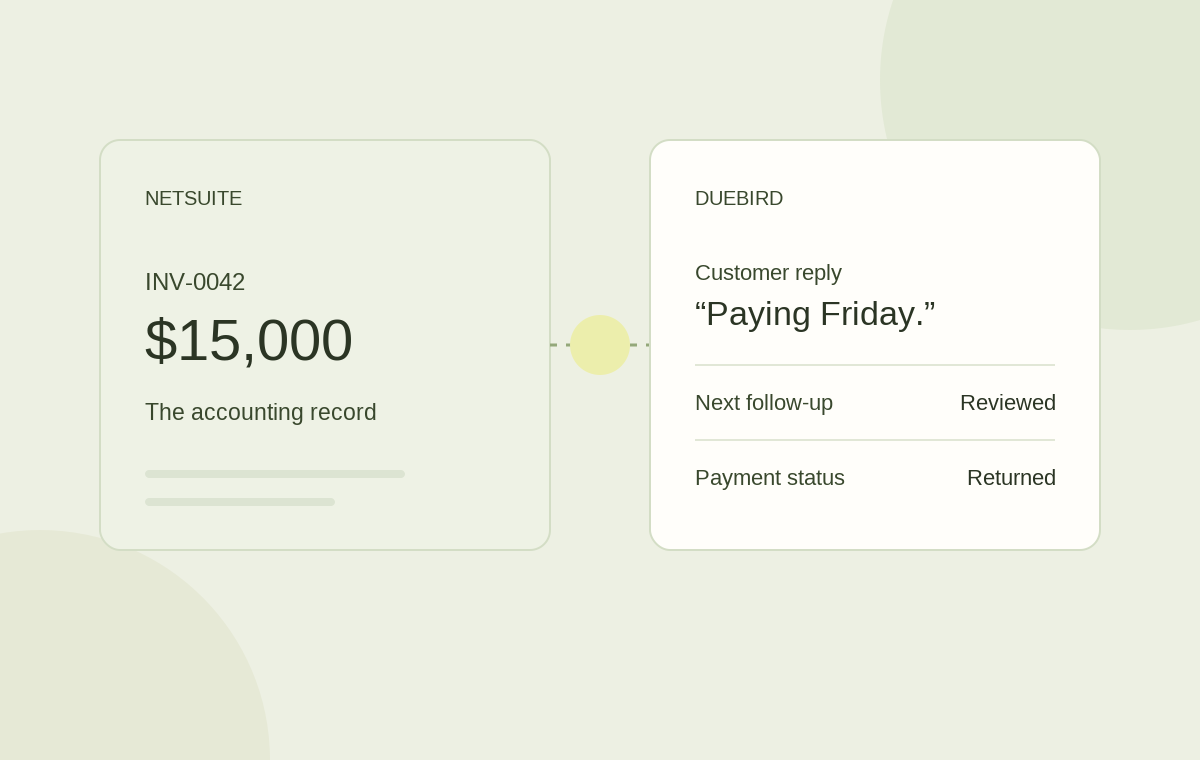
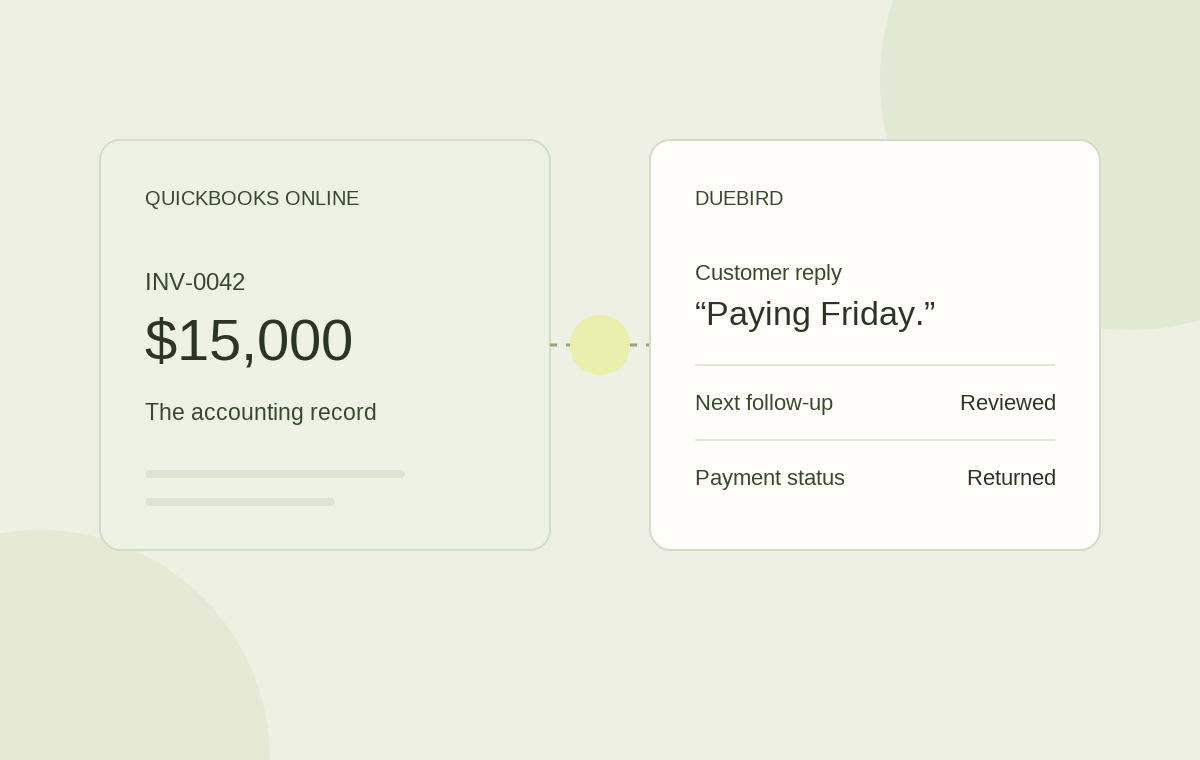
NetSuite keeps the accounting record. Duebird can post reviewed invoices to it or bring in the invoices it issues, keep the customer conversation with each one, and return the reviewed payment status.
NetSuite can stay the system that holds your accounting record while your team handles customer replies, follow-up, and payment review in Duebird.
This guide covers what stays in NetSuite, the two ways to work with it, and what happens when you connect.
Keep the accounting record in NetSuite
NetSuite holds the accounting record: your customers, products and services, invoices, and payments as your books know them. Duebird connects the commercial work around those records.
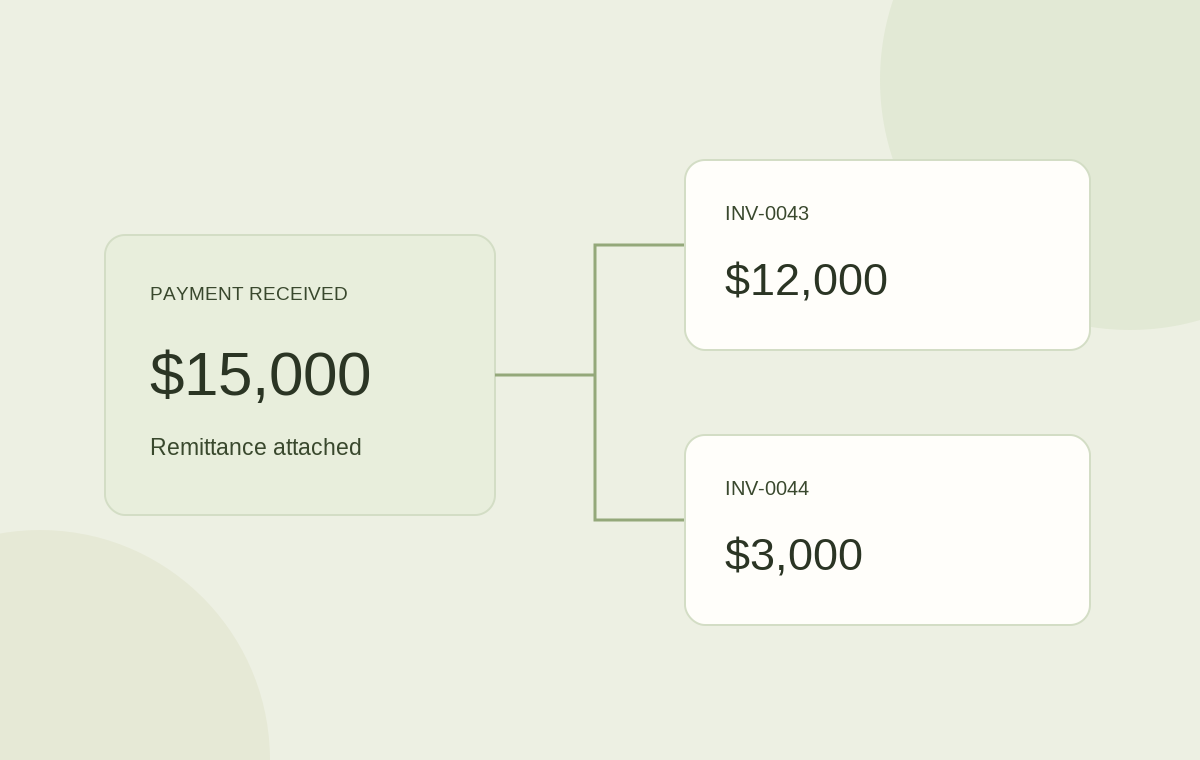
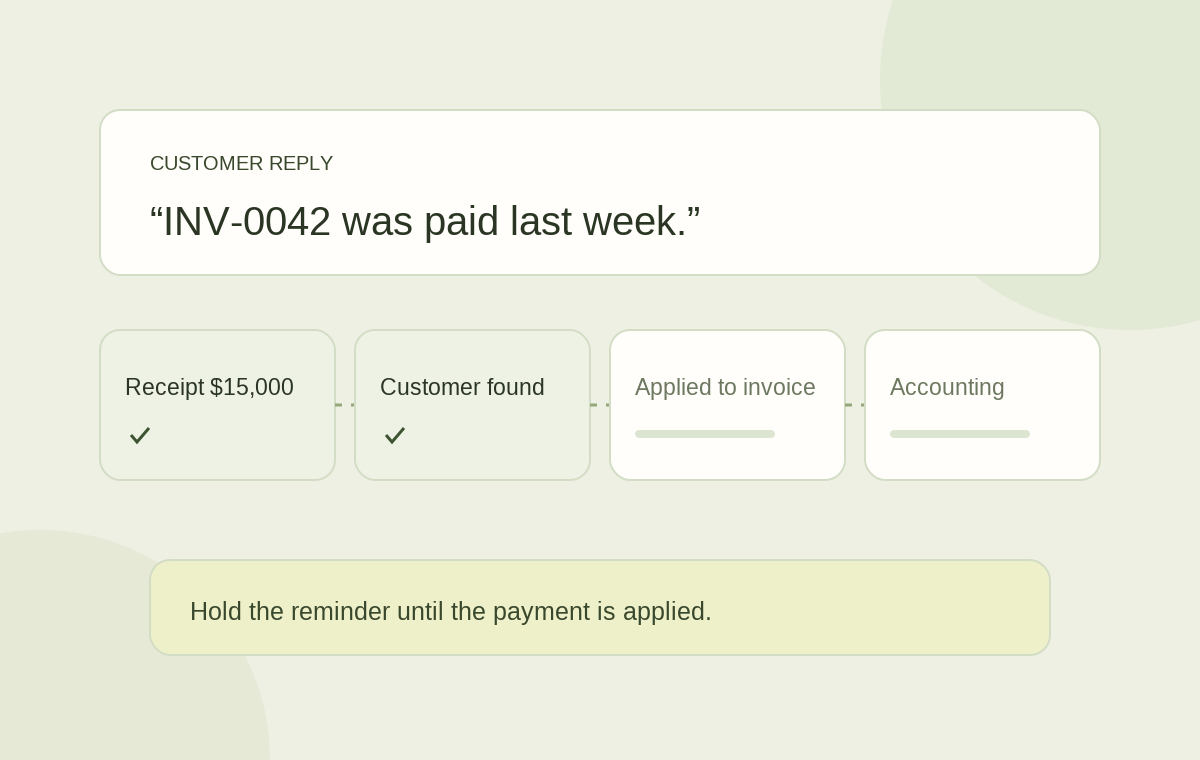
Payment received, payment applied, and the accounting result are separate states. A connected workflow keeps each one visible, so the team knows which step an invoice is waiting on.
If invoices already start in NetSuite, see how to keep ERP-originated invoices and improve what follows.
Choose where billing starts
Bill in Duebird: the invoice is prepared from the agreed terms, reviewed, and then posted to NetSuite. A customer or product NetSuite does not have yet is listed for approval before it is created.
Bill in NetSuite: invoices you already issue there are brought into Duebird, where the customer conversation and payment options connect to them.
Either way, the reviewed payment status is returned to NetSuite.
Put the next collection action in context
An open invoice is only part of the picture. The latest reply, a payment promise, or a question about a charge decides what the next message should say.
NetSuite has its own dunning letters for overdue invoices. Duebird adds the conversation: the reply, the promise, and the person responsible for the next step, with a follow-up your team reviews before it goes.
See how to manage the AR conversation around each open invoice.
Connect and review the first records
A NetSuite administrator connects the account and chooses the subsidiary to work with. Then the setup runs in reviewed steps.
- Customers and products are read from NetSuite and added when you apply them.
- Tax rates are matched to the rates your invoices charge.
- Nothing changes in Duebird until someone on your team reviews and applies it.
- Record ownership, entities, and posting rules are confirmed with your team before rollout.
Once connected, check payment application on one invoice before rolling out.
Start with one invoice
Duebird connects with NetSuite so the invoice, the customer conversation, and the reviewed payment stay together, with NetSuite holding the accounting record.
Bring one open invoice and the reply that came with it to a walkthrough. Anything particular to your setup is confirmed before rollout.
Keep the accounting record in NetSuite. Connect the conversation, the follow-up, and the reviewed payment around it.
Sources and further reading
Official references for the concepts and software examples discussed in this article.