Billing against a customer’s blanket PO, release by release
A blanket PO authorizes 10,000 units over a year. Each release ships against it. The invoice that bills unit 10,001 is the one that gets rejected.
By the Duebird team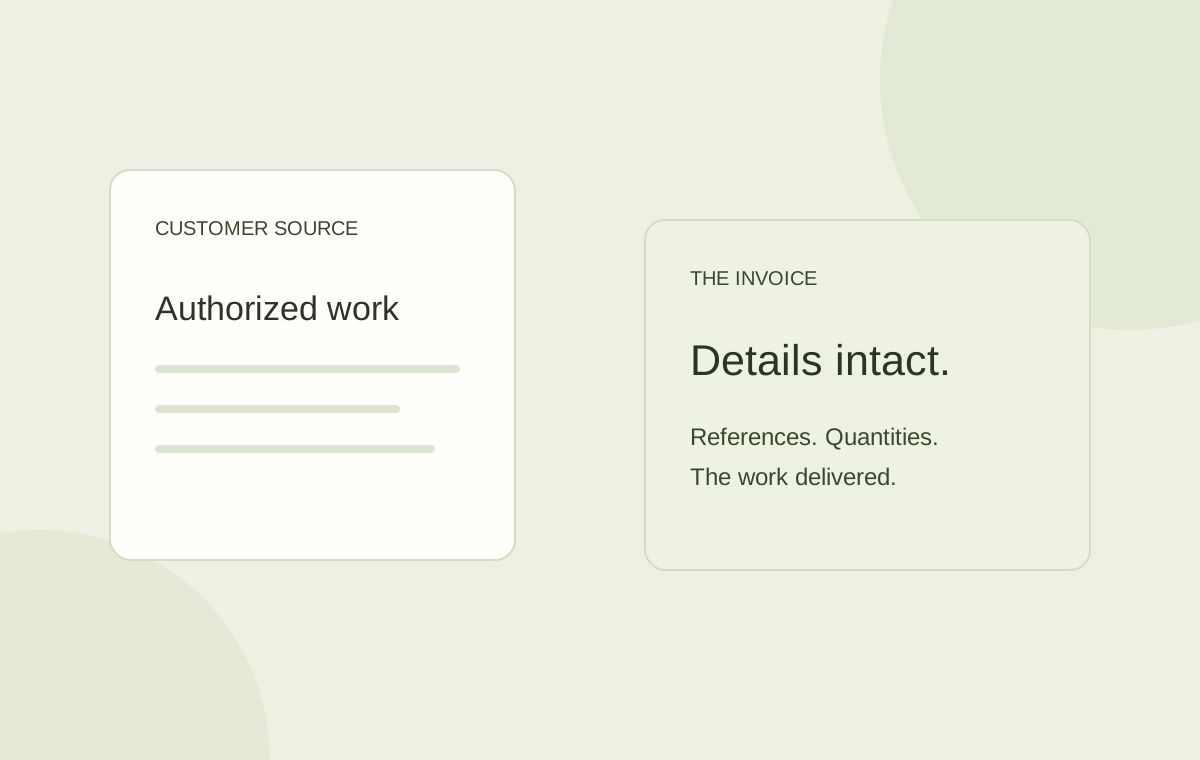
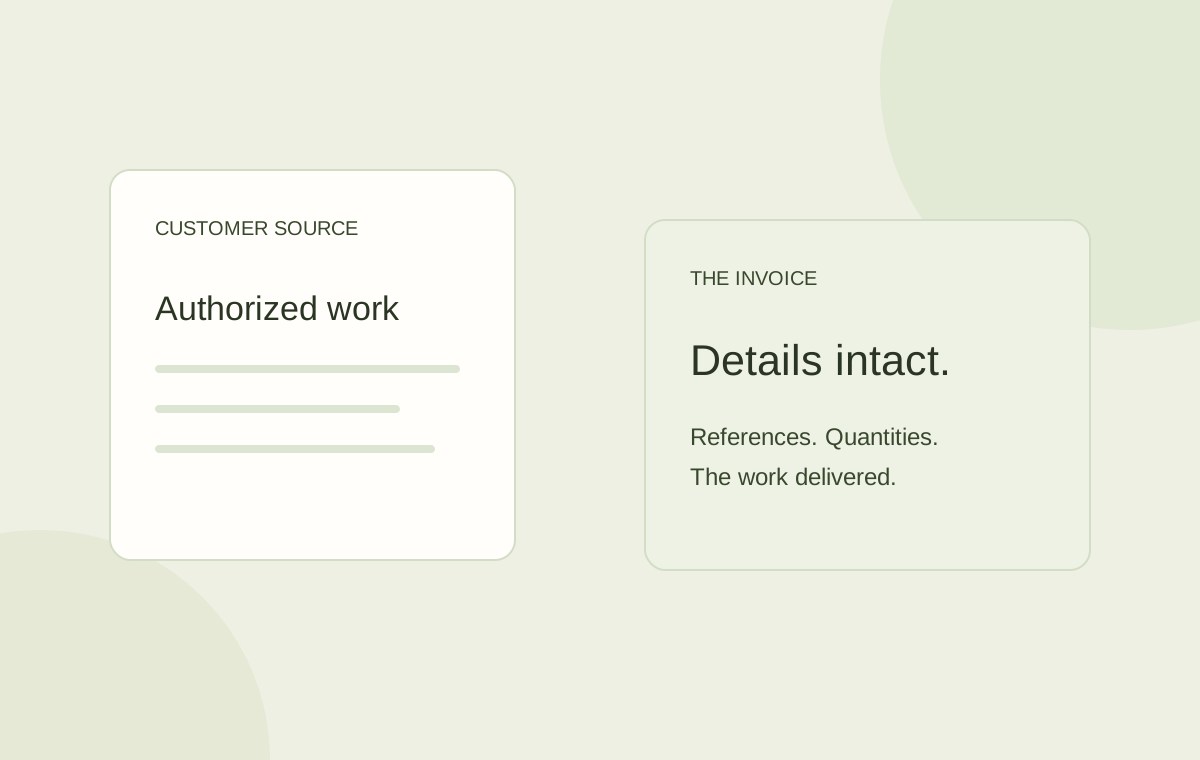
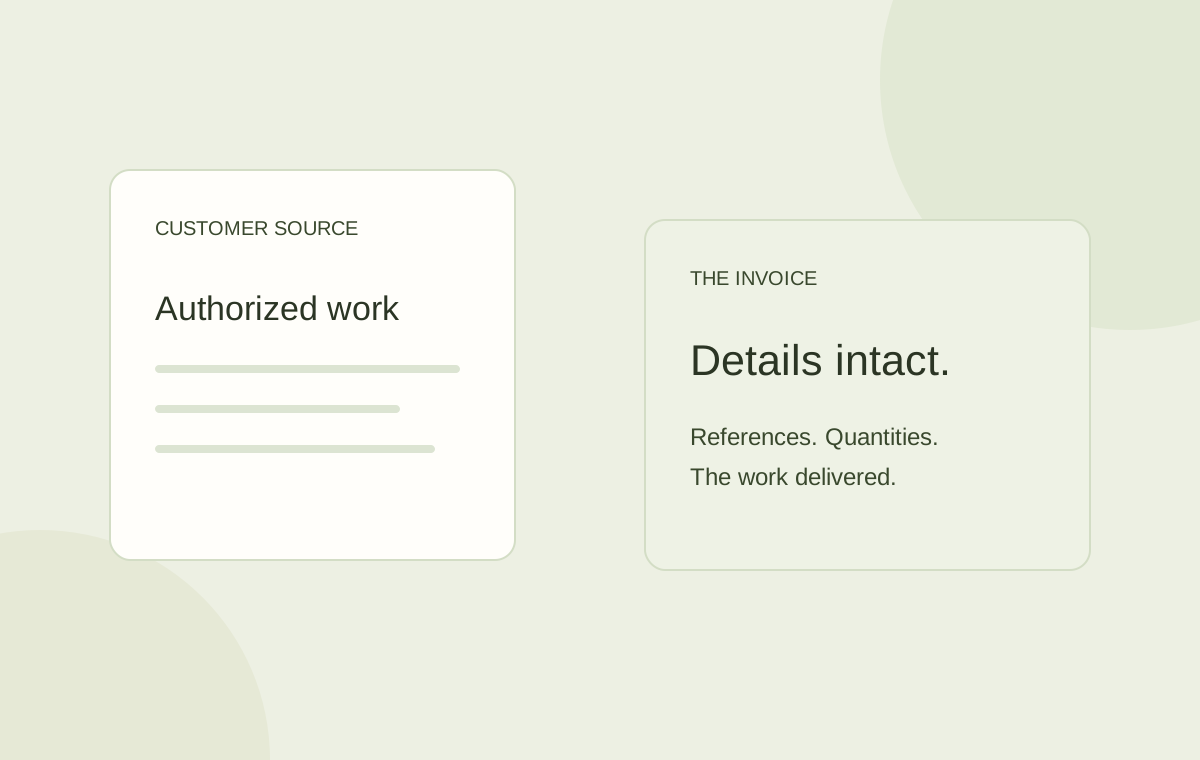
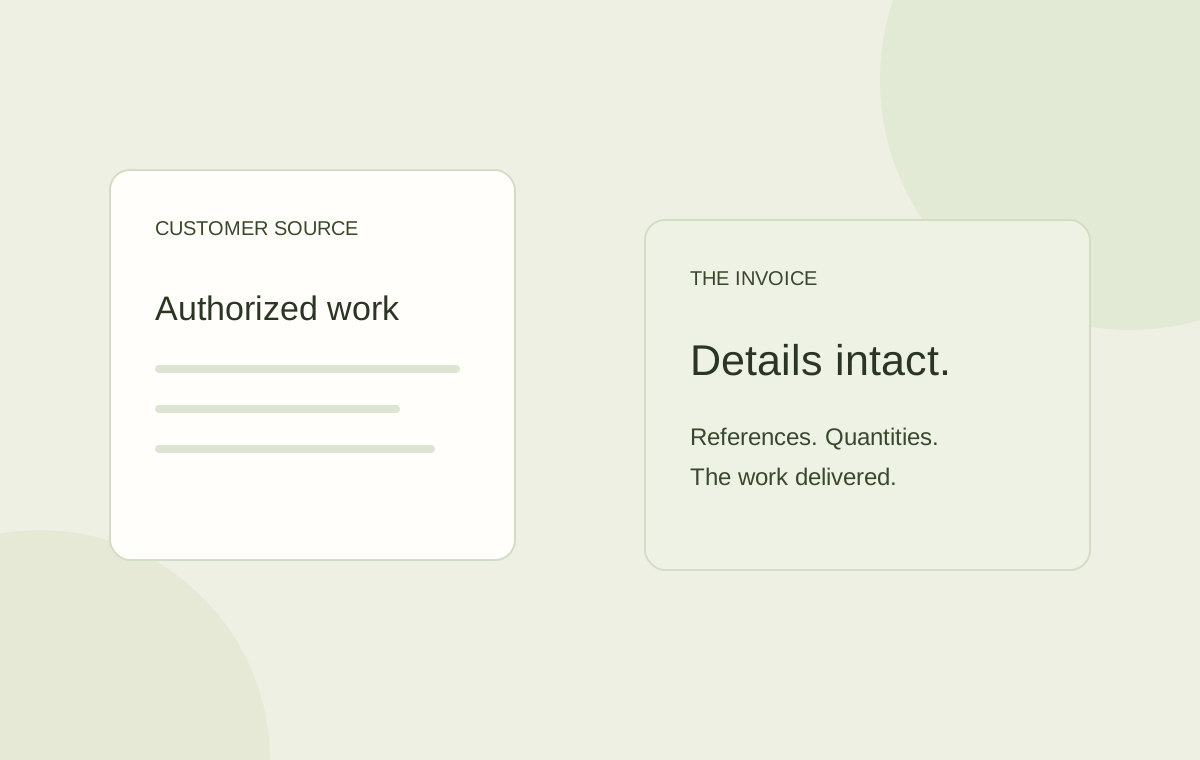
Review each release against the blanket PO’s authorization, delivered quantities, and earlier invoices. Keep the release reference on the invoice so the customer can trace the charge.
FIELD NOTE · MANUFACTURING AND FABRICATION · 6 MIN READ
A blanket PO authorizes 10,000 units over a year. Each release ships against it. The invoice that bills unit 10,001 is the one that gets rejected.
Manufacturers selling to larger companies live inside their customers' purchasing systems. The customer's PO number, line numbers, item codes and units have to appear on the invoice exactly as the customer issued them, or the invoice fails their three-way match and waits.
Their item codes, your products
The customer calls your part “BRKT-22-ZN”. You call it “Zinc bracket, 22mm”. Both names need to live side by side: yours for your catalog and your ledger, theirs for their invoice. Learning that mapping once, per customer, saves retyping it on every invoice.
Track what each PO line has left
A blanket PO is a budget. Every shipment draws it down. Before an invoice goes out, you should know how much of each PO line has been billed and whether this invoice would go over.
Quote, PO and invoice should agree
When the customer's PO cites your quote, the prices on the PO should match the quote. When they don't, that is worth catching before you ship, not after you bill.
Required fields are per customer
One customer wants a buyer name on every invoice. Another wants a cost center. Keeping those rules per customer, and checking them before an invoice is approved, avoids the rejection email.
- Records each PO as written and matches its lines to your products through each customer's own item codes.
- Bills deliveries against PO lines and flags a line that would bill more than the PO authorized.
- Links a PO to the quote it cites and raises a question when the prices differ.
- Per-customer required invoice fields, checked before an invoice can be approved.
Getting invoices bounced by a customer's AP portal? Let's find out why.
Keep the customer’s requirements and the billable source with the invoice.